

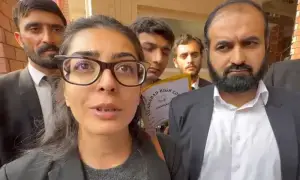
An anti-terrorism court in Pakistan has officially wrapped up the trial for prominent human rights lawyer Imaan Zainab Mazari-Hazir and her husband, Hadi Ali Chattha, leaving the legal community awaiting a final decision as anticipation builds for the upcoming Imaan Mazari security breach verdict. The proceedings, which took place behind the secure walls of Adiala Jail, concluded on Tuesday after both the defense statements and final state arguments were fully heard by the bench.
The Charges Behind the High-Profile Case and the Imaan Mazari Security Breach Verdict
The legal battle stems from an incident in 2024 involving an alleged disruption of an international cricket team’s official transit route. Authorities accused the couple of removing security barriers and inciting public unrest during the event. Following formal indictments in October of that year, the pair faced serious terrorism-related provisions in a specialized court setting, drawing public scrutiny over the limits of peaceful protest.
To fully understand the gravity of the pending Imaan Mazari security breach verdict, it is necessary to examine the broader context of the case’s timeline. The initial confrontation occurred amid heightened security deployments in the twin cities, where high-profile foreign athletic delegations are provided state-level escorts. According to police reports filed in the aftermath of the disruption, the blockage of main thoroughfares caused significant delays and raised serious security concerns among law enforcement agencies. Investigators subsequently invoked anti-terrorism provisions, arguing that obstructing state convoys and inciting crowds near restricted zones constituted a direct challenge to state writ. Defense attorneys, however, have consistently maintained that the couple was merely exercising their constitutional rights to dissent and peaceful assembly, arguing that applying anti-terrorism legislation to a traffic dispute or street protest sets a dangerous precedent for political activists, journalists, and human rights defenders across Pakistan.
Inside the Final Court Proceedings
During the recent court session at Adiala Jail, both defendants formally recorded their statements under Section 342 of the Code of Criminal Procedure, an essential legal mechanism allowing the accused to address the evidence presented against them. With the state counsel delivering concluding arguments right after, the judge announced that the official verdict would be delivered later in the month, as detailed further in the original report.
Throughout the several months of hearings, the courtroom atmosphere remained charged with political and legal tension. Supporters of the human rights lawyer regularly gathered outside judicial complexes to demand her immediate release and the dropping of all terrorism charges. Legal experts have frequently pointed out that the invocation of the Anti-Terrorism Act (ATA) in cases involving civil protest or minor public scuffles reflects a wider pattern of judicial overreach. The outcome of this trial is expected to serve as a crucial benchmark for how lower and special courts handle dissent, public assembly, and security-related charges in the future. Observers note that a conviction could severely chill advocacy efforts, while an acquittal might offer renewed legal protections for activists facing state crackdowns.
Parallel Legal Battles at the Supreme Court
The conclusion of the trial arrives amid a flurry of broader legal maneuvers. Just days prior, the couple escalated their fight to the Supreme Court. They sought to challenge an Islamabad High Court decision that had previously declined to put a temporary halt on the ongoing ATC trial. Their legal team has continually argued against the inclusion of terrorism charges, maintaining that the initial framing of the case was legally unjustified.
What Comes Next
While lawyers await the ruling, the case highlights tensions surrounding activism, security protocols, and the application of anti-terrorism laws in high-profile civil disruptions. Observers across the country are closely watching to see how the court rules when the final decision is formally announced.
Related reading:
- Imaan Mazari terrorism case ATC: Islamabad Court Dismisses Plea to Drop Charges
- Rana Sanaullah terrorism warning Pakistan: PM Aide Warns Political Parties Against Opposing Anti-Terror Fight
- Anti-Terrorism Court Upholds Sohail Afridi Junaid Akbar Arrest Warrants Over Nov 26 Protest
