

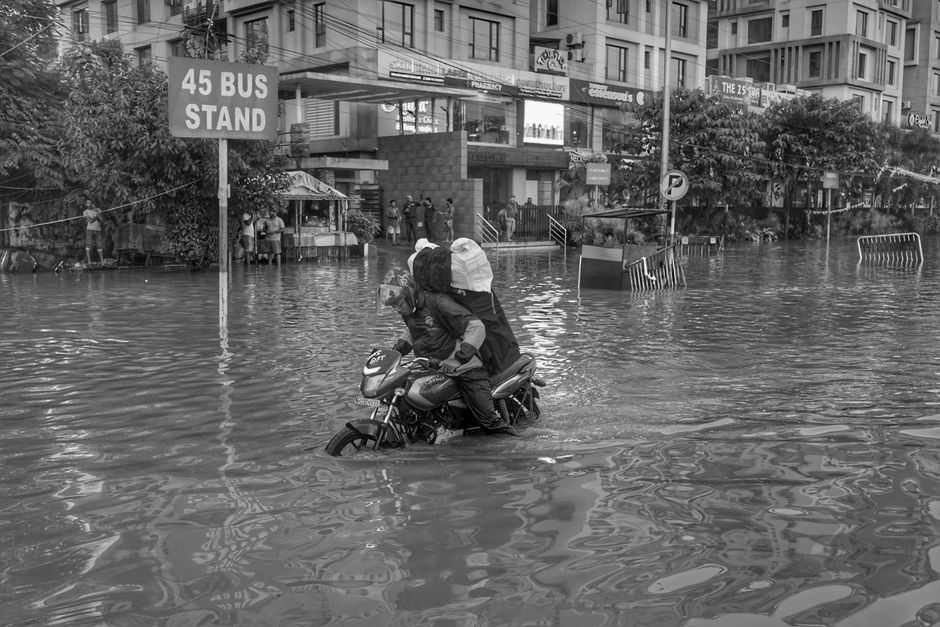
Residents and environmental advocates in Karachi have raised serious alarms regarding ongoing construction work along Nehr-i-Khayyam, an open waterway located in Clifton’s Block 5. Concerned citizens recently staged a public awareness walk to protest the project, arguing that covering the critical drainage channel could drastically shrink its width, elevate the threat of Nehr i Khayyam Karachi flooding, and clear the path for unwelcome commercial development. As metropolitan areas across South Asia grapple with increasingly erratic monsoon patterns and poor drainage maintenance, local communities are demanding immediate accountability and sustainable infrastructure solutions that prioritize human safety and ecological preservation above all else.
Community Protests and Environmental Concerns Over Nehr i Khayyam Karachi flooding
Protesters gathered near the construction zone holding banners and placards with messages urging authorities to halt the concreting of local drains and protect the natural waterway. According to the original report, participants pointed out that rows of mature trees that once lined both banks of the channel have largely been removed, leaving only a sparse few standing where construction activities are currently underway. Environmentalists stress that losing these natural buffers not only destroys local biodiversity and urban green spaces but also removes essential soil stabilization features that historically helped absorb heavy rainfall and mitigate sudden surges in water volume during heavy downpours.
Questions Over Sewage, Infrastructure, and Transparency
During the demonstration, community members voiced strong frustration regarding how the waterway is managed. Rasha Tarek, a local representative with the Karachi Residents’ Community, questioned the logic of allowing untreated sewage to flow into the channel and then using that very pollution as an excuse to pave over a majority of it. Activists have demanded complete transparency, insisting that project details be made public alongside a thorough and independent environmental impact assessment before any further work moves forward. Urban planners argue that patching over systemic municipal failures—such as inadequate sanitation networks and broken sewerage lines—with concrete slabs is a dangerous band-aid fix that only transfers the crisis downstream rather than solving the root causes of environmental degradation.
Origins of the Project and the Broader Historical Context
While local communities push back against the current work, environmentalists have shed light on the project’s background. Masood Lohar, founder and CEO of the Clifton Urban Forest, noted that the initiative was originally greenlit by the Sindh cabinet back in 2019 under the banner of recreational improvement. However, local stakeholders maintain that circumstances and environmental realities require a fresh look at the implications of altering the natural drainage system, especially given recent catastrophic urban flood events in other parts of the region that serve as a grim reminder of what happens when natural drainage paths are obstructed. Critics argue that public consultation was severely lacking when the initial plans were drawn up years ago, and modern municipal governance demands that citizens have a direct say in decisions that fundamentally alter their immediate neighborhoods and daily safety.
As pressure mounts from civic groups and environmental experts, residents hope authorities will pause operations to reevaluate the long-term safety and ecological well-being of the neighborhood. The ongoing conflict at Nehr-i-Khayyam highlights a much broader tension within rapidly expanding urban centers across Pakistan: the difficult balancing act between commercial modernization, aesthetic beautification, and the absolute necessity of maintaining resilient, climate-adaptive infrastructure capable of protecting vulnerable populations from extreme weather hazards in the years to come.
Related reading:
- Lebanese Lawmaker Sounds Alarm Over lebanon un peacekeepers multinational force Proposals
- Severe Typhoon Approaches Eastern Japan With High Risks of Flooding and Landslides
- Rawalpindi Islamabad Heavy Rain Flood Triggers Severe Urban Inundation
