

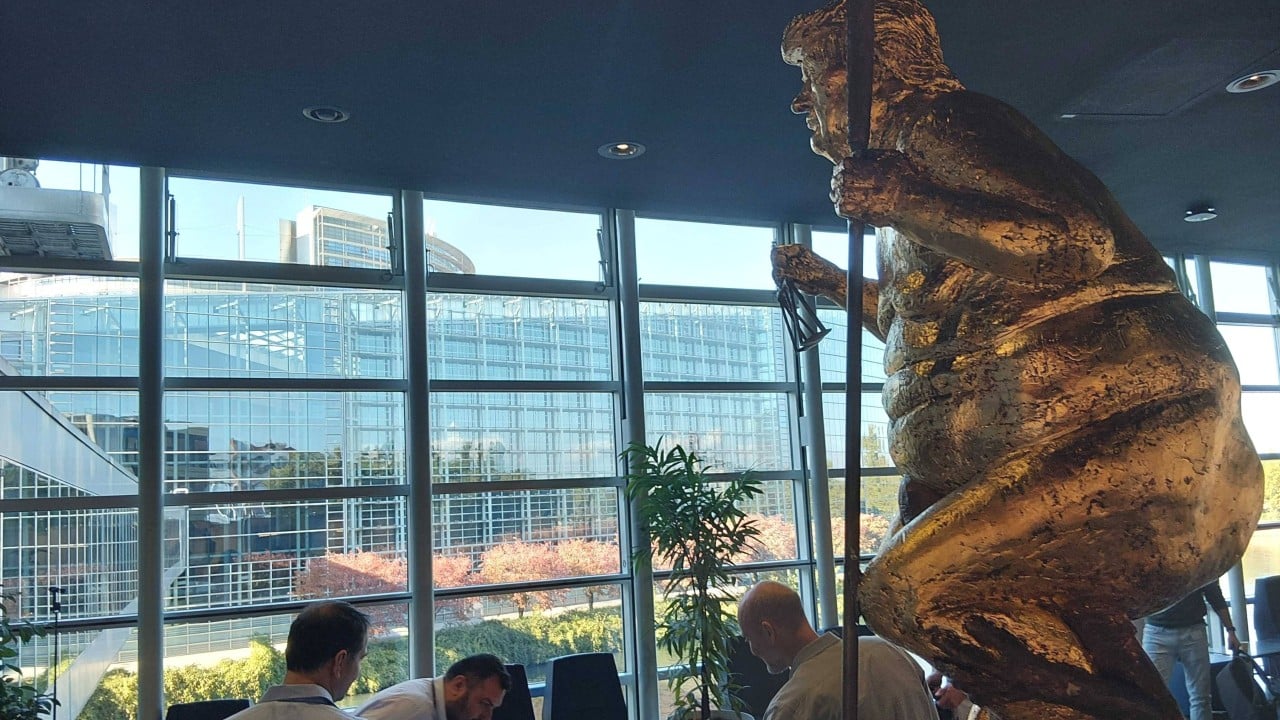
Lawmakers and visitors walking the halls of the European Parliament in Strasbourg encountered a striking new exhibition this week. A towering, gilded sculpture depicting a completely naked U.S. political figure has taken up temporary residence inside the legislative building, immediately sparking widespread public conversation and drawing curious onlookers from across the political spectrum. This provocative display highlights the ongoing tension between contemporary political art and the formal environments of international diplomacy.
The Inspiration Behind the Naked Trump Statue EU Parliament Installation
The striking installation is the creation of Danish artist Jens Galschiot, who has a long history of producing large-scale political and social commentary pieces. Officially titled Orange Plague—and alternatively known by the secondary moniker King of Injustice—the satirical artwork aims to deliver a sharp critique of modern political power dynamics. Standing at an impressive 2.5 meters tall including its pedestal, the piece has quickly become a major talking point due to its imposing size and provocative imagery.
Galschiot is no stranger to controversy, having previously built a reputation for staging public art interventions that challenge institutional authority and global figures. His past projects often target immigration policies, human rights issues, and the concentration of global wealth and power. By bringing this latest installation to the heart of the European Union, the artist aimed to force international policymakers to engage with his critical perspective on populist leadership. Observers from various cultural backgrounds have weighed in on the effectiveness of using such shocking visual metaphors to stimulate political debate within official government spaces.
A Detailed Look at the Controversial Artwork
The sculpture itself features a larger-than-life figure seated completely unclothed atop the shoulders of a noticeably smaller individual. In one hand, the central figure casually clutches a long golf club. The entire structure is coated in a gleaming metallic gold finish that catches the fluorescent lights of the parliament corridors. According to the original report, the exhibition opened its doors on Tuesday within the French headquarters of the European Union’s legislative body.
Technical details of the construction reveal a meticulous effort to ensure the piece could withstand indoor public display while maintaining its striking visual impact. The lightweight core materials are covered in a durable metallic coating, allowing the sculpture to dominate the corridor space without posing structural challenges to the historic building. Furthermore, installation teams had to navigate strict safety regulations to ensure that crowds viewing the artwork would not block critical emergency evacuation routes within the busy parliamentary complex.
Reactions and Political Discourse in Strasbourg
Art installations inside major international political institutions are rarely boring, but Galschiot’s latest work has pushed boundaries even further than usual. While some visitors view the sculpture as a bold expression of free speech and political satire, others question whether such provocative imagery belongs inside an official diplomatic and legislative forum. Regardless of individual interpretations, the striking golden figure has undoubtedly succeeded in turning heads and igniting lively debates among diplomats, tourists, and staff alike.
Response from EU officials has been notably divided. Several progressive parliamentarians defended the display as a vital testament to European values regarding artistic freedom and open political discourse. Conversely, conservative factions within the assembly expressed frustration, arguing that hosting such a partisan and explicit piece undermines the institutional neutrality expected of the European Parliament. Security teams have also had to manage larger-than-normal crowds gathering in the corridors to photograph the artwork and debate its merits.
As the exhibition continues its run in Strasbourg, Orange Plague remains a potent reminder of how contemporary art can intersect with international politics, capturing global attention and forcing observers to confront challenging visual commentary in the most unexpected of places. The long-term impact of this display on how the institution reviews incoming art proposals remains to be seen.
Related reading:
- Trump Warns US Must Conclude Conflict with Iran: Key trump war with iran comments Explained
- Trump Announces Upcoming Call With Putin Over Reported Pneumonic Plague Case in Russia
- Trump Putin Plague Call Takes Center Stage Amid Mounting International Pressure
