

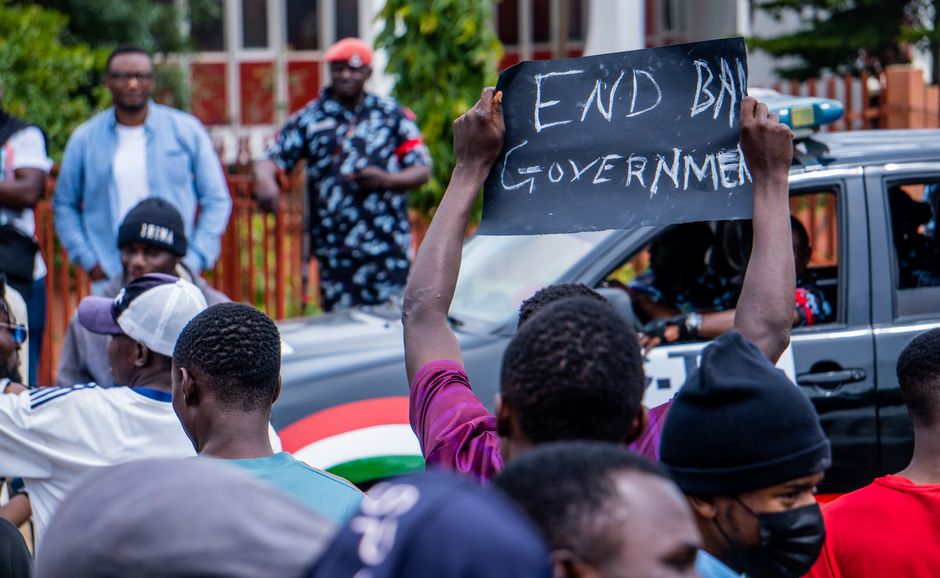
Taking to the streets or organizing public sit-ins remains a defining feature of political resistance across the globe. Yet, a persistent question remains for civil rights advocates and ordinary citizens alike: under what conditions do authorities actually pay attention to determine when does government listen to protesters? Recent demonstrations, such as the high-profile sit-ins organized by Jamaat-e-Islami and the historic labor strikes across European transport networks, have once again brought this dilemma into the global spotlight, forcing a closer look at how governments decide to engage with public dissent.
The Dynamics of Public Pressure
For a protest movement to capture the attention of policymakers, volume and visibility are rarely enough. Authorities are constantly evaluating the political cost of ignoring a demonstration versus the concessions required to appease it. When large groups occupy public spaces, disrupt daily commerce, or gather in front of key government buildings, the political dynamics shift. According to the original report, high-visibility actions often force officials off the sidelines and into formal negotiations, though the outcomes can vary wildly depending on the political stakes.
Peaceful Demonstrations Versus Disruptive Action
A central debate in political science revolves around the efficacy of peaceful demonstrations versus more disruptive methods. While peaceful rallies demonstrate broad public support and moral high ground, they can sometimes be easily ignored by entrenched administrations if they fail to impact economic or political stability. On the other hand, prolonged sit-ins create logistical challenges for urban centers, drawing intense media coverage that makes it difficult for leaders to maintain a posture of indifference.
Historical examples illustrate this stark contrast. During the American Civil Rights Movement, nonviolent marches and sit-ins deliberately disrupted segregated public infrastructure to force legislative action, proving that strategic disruption is often the catalyst for reform. Similarly, environmental blockades globally have shown that economic friction accelerates official responses far quicker than quiet petitioning.
The Role of Timing and Political Vulnerability
Government responsiveness is rarely just about the size of a crowd; it is deeply tied to timing. Protests that coincide with economic crises, upcoming elections, or fragile coalition governments often yield faster responses. When leaders feel their grip on power is vulnerable, they are significantly more inclined to send negotiators to address grievances. Conversely, during periods of stable governance, even massive demonstrations can face stone-walling or heavy-handed state pushback.
Political scientists frequently study this through the lens of political opportunity structures. For instance, the 2011 Arab Spring uprisings demonstrated that when a regime’s core security apparatus begins to fracture under the weight of simultaneous economic distress and mass mobilization, leaders are suddenly forced to reevaluate when does government listen to protesters before their entire administration collapses.
Bridging the Gap Between Street and State
Ultimately, the effectiveness of public protest highlights a gap in modern governance. When institutional channels fail to address the immediate needs of the populace, citizens resort to collective action to make themselves heard. Whether these efforts translate into lasting policy changes depends heavily on the strategic endurance of the protesters and the political calculations of those in power.
As political landscapes continue to shift around the globe, understanding the friction between street-level activism and state authority remains crucial for anyone hoping to drive meaningful societal change.
Related reading:
- Azad Jammu and Kashmir Prime Minister Assigns AJK Government Cabinet Portfolios
- Azad Jammu and Kashmir Installs New AJK Government Amid Internal Friction
- Afridi Karachi street movement Gains Momentum Amid Sindh Standoff
