

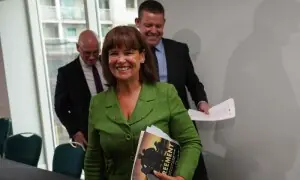
In an unusual and coordinated political gathering held in Cardiff, top figures representing nationalist movements across Scotland, Wales, and Northern Ireland converged to assert their collective right to pursue self-determination. As UK nationalist leaders demand independence, this high-profile meeting brought together major figures committed to breaking from the UK, marking a synchronized push for local control.
How UK Nationalist Leaders Demand Independence in a Rare Coalition
The summit featured prominent political leaders operating in their party capacities rather than official government roles. Attendees included John Swinney representing the Scottish National Party (SNP), Rhun ap Iorwerth leading Plaid Cymru in Wales, alongside Mary Lou McDonald and Michelle O’Neill, who serve as the president and vice-president of the pro-Irish unity party Sinn Fein. According to the original report, these leaders used the platform to formally challenge Westminster’s authority over constitutional futures.
Historically, the relationship between Westminster and the devolved administrations has been characterized by tension over the limits of devolution. The Scotland Act 1998, the Government of Wales Act 2006, and the Northern Ireland Act 1998 established the frameworks for regional governance, but constitutional matters—specifically regarding sovereignty and the union—remained strictly reserved to the UK Parliament in London. Successive UK governments have maintained that the Union represents the settled will of the people, pointing to the 2014 Scottish independence referendum where 55% voted to remain part of the United Kingdom as a decisive mandate.
However, regional parties argue that shifting political landscapes, particularly following the UK’s departure from the European Union, have fundamentally altered the constitutional compact. Because Scotland and Northern Ireland voted predominantly to remain in the EU, nationalist movements contend that their populations are being dragged down paths they rejected, thereby justifying renewed demands for secession and border polls.
Challenging Westminster’s Control and Official Reactions
At the heart of the Cardiff gathering was a firm declaration that central authorities in London hold no legitimate power to obstruct democratic processes. The participating parties released a memorandum of understanding explicitly stating that their respective populations possess the inherent right to decide their political destinies. They argued that no national government should be allowed to undermine or block the foundational principle of self-determination for citizens living outside of England.
In response to these coordinated declarations, official reactions from Westminster have remained predictably firm. Downing Street and senior Cabinet ministers have consistently reiterated that the constitutional framework is clear and that holding further referendums is not currently on the political agenda. Government spokespersons have emphasized that the focus of all administrations should be on economic growth, public services, and cost-of-living challenges rather than constitutional division. Critics of the nationalist coalition also argue that regional governments are using independence rhetoric to deflect from domestic policy challenges within devolved sectors such as healthcare and education.
International Spotlight and Recent Momentum
The timing of the coalition’s meeting follows closely on the heels of international commentary regarding Irish unification, which injected fresh energy into ongoing constitutional debates. Observers note that recent remarks from high-profile global figures have helped push the broader discussion around the future of the United Kingdom back into the daily news cycle. Sinn Fein leadership emphasized that such international attention proves the conversation surrounding regional unity and independence is more active than ever.
As these regional movements continue to coordinate their messaging and strategies, the political pressure on central government authorities is expected to grow. While Westminster has historically resisted calls for breakaway referendums, this united front across multiple nations ensures that the debate over the future shape of the United Kingdom will remain a central fixture in domestic and international politics for years to come.
Related reading:
- Trump united Ireland comments spark global debate
- Devolution and the UK Constitution: A Historical Overview
- Westminster Powers and Reserved Matters Explained
