

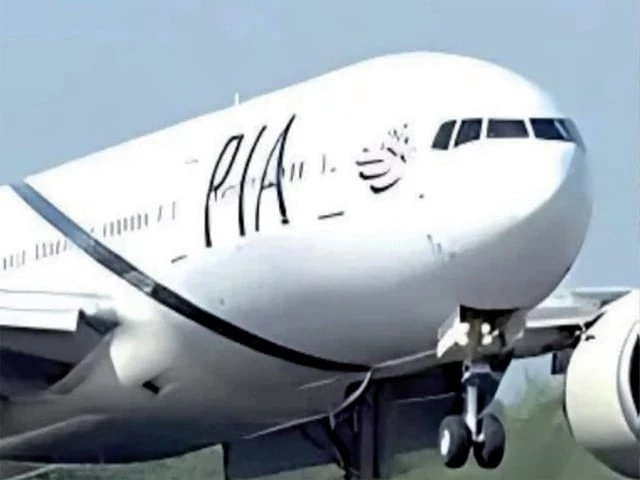
The government of Pakistan has officially stepped back from directly funding the acquisition of new planes for Pakistan International Airlines (PIA), separating state oversight from daily commercial operations. While the national carrier looks to modernize its aging fleet, officials have clarified that public funds will not be utilized to buy aircraft. Instead, the administration’s role is strictly confined to easing administrative pathways, connecting with international suppliers, and helping the airline secure external commercial backing through structured PIA aircraft purchase government financing policies that emphasize fiscal prudence.
Defining the Government’s Boundaries on PIA Aircraft Purchase Government Financing
As the national carrier navigates its ongoing restructuring efforts, questions have naturally surfaced regarding how a fleet upgrade will be paid for. Addressing these financial concerns, the administration emphasized that the state’s treasury will not bear the cost of purchasing new airframes. According to the original report, financial adviser Khurram Schehzad made it clear that public money is off the table regarding the direct acquisition of commercial passenger jets for the airline, cementing a firm boundary for future budget allocations.
Context on PIA Privatization History and Restructuring
The debate surrounding airline funding is deeply rooted in decades of economic turbulence and state management challenges. For years, Pakistan International Airlines operated under heavy government subsidies, absorbing billions of rupees from the national exchequer to cover recurring operational deficits. This reliance on state bailouts eventually strained public finances, prompting successive administrations to push for comprehensive structural reforms. Privatization attempts have stalled multiple times due to political resistance, legacy debt issues, and the sheer scale of the airline’s liabilities. By strictly drawing a line against direct state capital injections for new fleet acquisitions, current economic managers are attempting to force a cultural shift. The objective is to make the national flag carrier attractive to strategic private investors by demonstrating that future capital expenditures must rely on independent creditworthiness rather than taxpayer guarantees.
Broader Aviation Reforms and Market-Driven Operations
Beyond the immediate question of fleet renewal, Pakistan’s broader aviation sector is undergoing a regulatory overhaul aimed at meeting international safety and operational standards. Historically, the country’s civil aviation framework suffered from overlapping responsibilities between regulatory oversight and commercial airline management, a structural flaw that drew severe international scrutiny and temporary flight bans in key Western markets. Recent legislative and administrative reforms are designed to separate the Pakistan Civil Aviation Authority’s regulatory functions from commercial airport operations and service delivery. This institutional decoupling is critical for restoring global confidence, renewing safety certifications, and allowing domestic carriers to compete fairly. Aligning with these broader reforms ensures that airlines operating within the airspace adhere to strict financial transparency and technical compliance, paving the way for sustainable long-term growth.
Facilitating Without Funding
Although direct grants and government-backed purchases are out of the question, the state is not leaving the airline entirely to fend for itself. The official approach is to act as a bridge rather than a bank. Using diplomatic and institutional ties, state representatives are assisting PIA in connecting with global financial institutions, aviation technology providers, and major aircraft manufacturers. This facilitation aims to help the carrier negotiate better terms independently in the global market.
Navigating the Path to Fleet Modernization
Modernizing a commercial airline fleet requires substantial capital, technical compliance, and reliable supply chains. By keeping direct government expenditure out of the equation, the administration hopes to instill greater financial discipline within the airline while still supporting its operational turnaround. Securing leasing agreements, private credit, and foreign investment will ultimately fall on market-driven mechanisms rather than state bailouts.
Ultimately, the strategy signals a major shift in how state-owned enterprises are managed in the country. By allowing the airline to pursue its fleet renewal through independent commercial channels, authorities are steering toward a model where aviation operations stand on their own financial merits.
Related reading:
- Petrol Price Reduced Pakistan: Fuel Rates Drop Slightly as Government Adjusts Rates Ahead of Weekend
- Pakistan Petrol Price Increase Today: Fuel Prices Rise Across the Board as Government Adjusts Rates
- Chinese Airports Surge in Global Connectivity Rankings Following International Flight Expansion
