

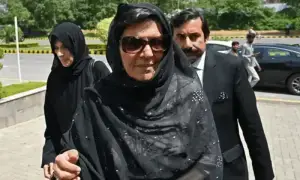
Provincial courts remain central to the ongoing legal battles involving Pakistan Tehreek-e-Insaf (PTI) leadership. Recently, the Punjab administration formally updated the Lahore High Court regarding the living conditions of a high-profile detainee, addressing concerns raised by her family over access to daily necessities while behind bars. Discussions surrounding the Aleema Khan jail facilities Punjab government updates have highlighted ongoing debates about the treatment of political detainees across provincial institutions, drawing sharp focus from both legal experts and civil rights advocates who closely monitor the administrative handling of high-profile incarcerations.
Court Update on Detention Conditions
During a recent court session, an official representative for the provincial administration presented a formal report concerning the status of Aleema Khan, the sister of imprisoned former Prime Minister Imran Khan. According to the original report submitted on behalf of the Kot Lakhpat jail superintendent, authorities have ensured that basic amenities and necessary personal items are fully accessible to her.
Details of Provided Items
The submitted document outlined a comprehensive list of provisions supplied to the detained relative. Among the items designated for her use are multiple clothing suits, a blanket, a bedsheet, footwear, and a towel. Additionally, administrative records confirmed the provision of personal care items, including a skincare kit, a toothbrush, face wash, and a shawl to manage local weather conditions.
Legal representatives for the petitioner had previously raised concerns regarding the adequacy of these arrangements, prompting the bench to demand a comprehensive inventory from prison authorities. The submitted compliance report sought to dispel notions of neglect, detailing exact measures taken by the superintendent to maintain standard living conditions in line with the Pakistan Prison Rules. Observers noted that while basic necessities have now been accounted for, broader questions regarding administrative oversight and the frequency of standard medical checkups continue to form a significant part of the ongoing dialogue inside the courtroom.
Broader Political Context and Arrests
The court update comes during a broader wave of detentions directed at opposition figures. Aleema Khan was initially taken into custody under public order regulations following a directive from the Lahore deputy commissioner. The crackdown coincided with preparations for a major political mobilization and march toward Islamabad, which the party subsequently rescheduled while maintaining its core demands regarding constitutional supremacy and the release of Imran Khan. Other family members, including Noreen Niazi and Dr. Uzma Khan, have similarly faced temporary detentions during this tense political climate.
The legal teams representing these detained individuals have consistently argued that these actions constitute an overreach of executive authority, pointing to public order maintenance laws as instruments of political pressure. Government counsels, however, maintain that all arrests and subsequent detentions are carried out strictly in accordance with maintenance of public order ordinances to prevent potential disruptions to public safety and infrastructure. This fundamental clash of legal interpretations has turned routine administrative updates into critical battlegrounds for defining the boundaries of lawful state action.
Legal Arguments and Court Scrutiny on Aleema Khan jail facilities Punjab government
The proceedings before the Lahore High Court shed light on the rigorous legal arguments deployed by defense counsels. Lawyers representing the PTI figures emphasized that fundamental rights guaranteed under the constitution extend fully to individuals held under preventative detention. They argued before the bench that denying timely access to family members or basic comforts violates established humanitarian guidelines and statutory prison regulations. In response, the state representatives detailed how the Aleema Khan jail facilities Punjab government framework complies with statutory requirements, presenting signed receipts and administrative logs to substantiate their claims of adequate care and compliance with judicial expectations.
Furthermore, constitutional experts following these developments have pointed out that judicial intervention remains a vital check against administrative high-handedness. By insisting on verified reports and detailed inventories, the Lahore High Court ensures a degree of transparency that standard bureaucratic channels rarely provide on their own. These hearings serve as a barometer for the state of civil liberties in the region, reflecting the delicate balance between maintaining public order and preserving the fundamental rights of political detainees.
Next Steps for Family Visits
Following the presentation of the government’s official compliance report, the presiding judge officially concluded the current petition. However, the judicial authority also instructed the provincial home secretary to review and legally process pending requests from the family regarding scheduled visitations with the detainee.
As political tensions persist across the region, judicial oversight remains a crucial avenue for families seeking transparency and fair treatment for detained political figures and their relatives. The ongoing legal scrutiny ensures that administrative bodies remain accountable to both the judiciary and the public, setting a significant precedent for how future petitions concerning detainee welfare will be evaluated and managed across the provincial judicial system.
Related reading:
- Islamabad High Court Rules Against Isolation for Imran Khan and Bushra Bibi in Adiala Jail in Landmark Imran Khan Adiala Jail isolation ruling
- Justice Raheel Kamran Sheikh Resigns from Lahore High Court to Focus on Legal Scholarship
- Justice Raheel Kamran resigns: Lahore High Court Judge Steps Down
