

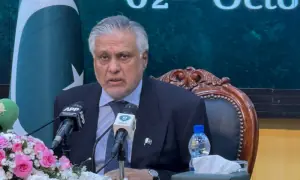
Pakistan’s Deputy Prime Minister and Foreign Minister Ishaq Dar has announced that high-level security talks for the Makkah defence pact committee meeting are slated for next week in Riyadh. The upcoming gathering will address recent regional security developments, focusing heavily on Houthi attacks targeting Saudi Arabia.
UNGA Discussions Lay the Groundwork for the Makkah Defence Pact Committee Meeting
The announcement followed a comprehensive press briefing where Dar outlined Islamabad’s diplomatic engagements during the 81st session of the United Nations General Assembly in New York. On the sidelines of the international summit, foreign officials seized the opportunity to coordinate their strategies regarding escalating security threats in the Middle East.
According to the original report, Dar noted that a strategic roadmap was successfully mapped out as leaders from the key nations were already gathered in New York.
In the broader context of Middle Eastern geopolitics, the resurgence of cross-border security challenges has severely tested existing regional alliances. The proliferation of advanced unmanned aerial vehicles and ballistic missile technology has transformed localized conflicts into multi-theater crises, necessitating robust multilateral responses. Historically, bilateral defense arrangements often lacked the agility required to counter asymmetrical threats originating from non-state actors operating across porous borders. Consequently, participating governments have increasingly recognized that traditional deterrence models must be overhauled to incorporate real-time intelligence sharing, integrated air defense networks, and synchronized diplomatic countermeasures. This evolving security architecture reflects a profound shift away from isolated national defense postures toward deeply integrated collective security frameworks designed to insulate vital energy corridors and critical infrastructure from persistent aerial bombardment.
The Makkah Accord Framework
The upcoming summit falls under the mandate of the Strategic Political Defence Committee (SPDC), a multi-nation body established via the trilateral Makkah Accord. Signed following extensive diplomatic deliberations, the Makkah Accord represented a watershed moment in regional defense cooperation, establishing a formal mechanism to pool military resources, harmonize foreign policy objectives, and present a unified front against external aggressors. This committee brings together three distinct leadership pillars from each participating country: the respective foreign ministers, defence ministers, and chiefs of army staff.
Preliminary coordination began weeks prior when the military leadership of the partner nations convened for a special session in Riyadh. That military consultation paved the way for the broader diplomatic alignment that culminated in New York, setting the stage for the upcoming Makkah defence pact committee meeting.
The historical genesis of the Makkah Accord can be traced back to successive waves of regional instability that exposed vulnerabilities in national defense grids across the Arabian Peninsula and South Asia. Recognizing that bilateral pacts alone could no longer guarantee absolute sovereignty against sophisticated regional provocations, state architects sought to institutionalize a permanent consultative framework. Over the years, this diplomatic foundation has weathered numerous geopolitical storms, gradually expanding its mandate from basic confidence-building measures to active, high-level operational synchronization. By institutionalizing regular ministerial and military summits, the signatories of the accord have effectively transformed a political declaration into a dynamic, highly responsive security apparatus capable of adapting to rapidly mutating threats on multiple fronts.
Emergency Consultations in Riyadh
Describing the scheduled gathering as an emergency measure, Dar emphasized that the committee must urgently evaluate current ground realities. The discussions will center heavily on safeguarding Saudi territory and stabilizing regional deterrence measures in the face of ongoing cross-border aerial assaults.
Following next week’s emergency talks in Riyadh, the defence committee is expected to maintain a regular schedule of subsequent meetings to ensure continuous monitoring and strategic coordination among the allied nations.
As regional dynamics continue to shift, this upcoming trilateral conference highlights the growing emphasis on collective security frameworks among partner states striving to counter emerging regional threats.
Related reading:
- Pakistan, Saudi Arabia, and Turkiye Plan Makkah defence pact military chiefs meeting Amid Regional Escalation
- Trilateral Talks Scheduled Between Turkey, Pakistan, and Saudi Arabia Following Regional Houthi Strikes
- Nauman Mahmood Makkah alliance secretary general Appointed
