

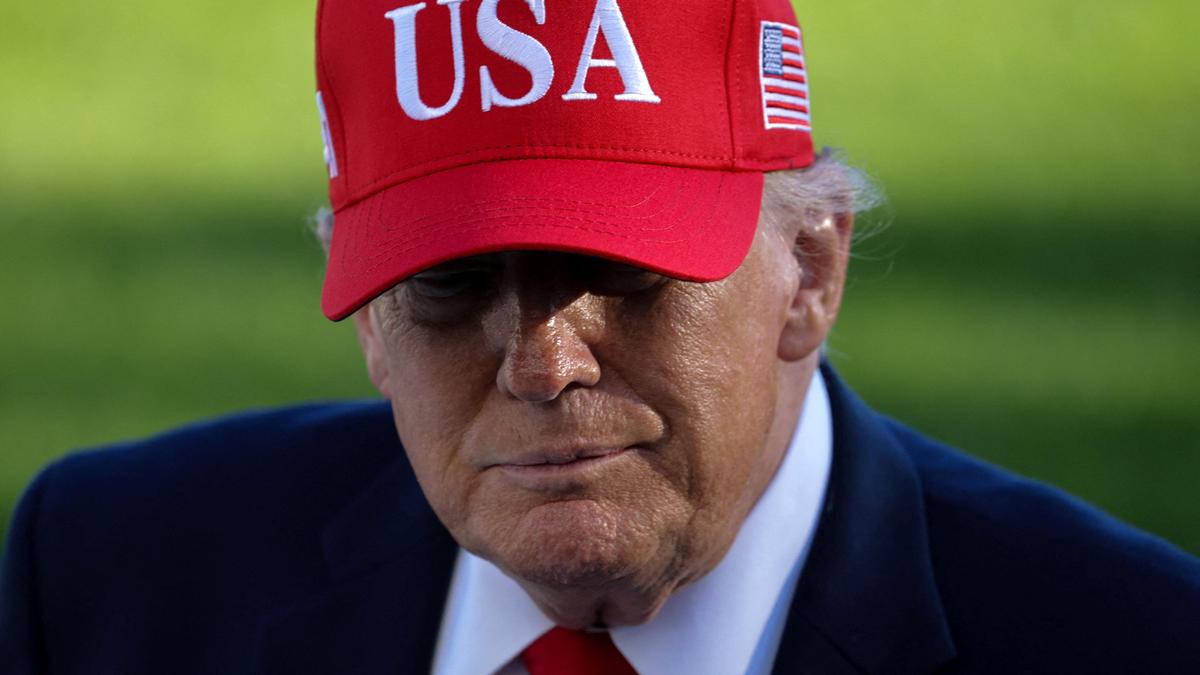
International relations between Washington and Tehran have sparked fresh debate after Trump’s statement that nobody knows who is running Iran. The back-and-forth highlights how far apart Washington and Tehran remain in their diplomatic dealings.
The Leadership Controversy
The dialogue gained traction after former U.S. President Donald Trump suggested that it remains unclear who is actually in charge of governing Iran. Such statements often underscore broader frustrations from Western leaders regarding transparency and accountability within foreign political systems, particularly nations under heavy international scrutiny and sanctions. Over the past several decades, the opaque nature of Iran’s political structure—which blends a theocratic clerical establishment with an elected presidency and parliament—has frequently baffled foreign policymakers. Observers in Washington often struggle to pinpoint where ultimate authority lies on critical matters, especially when hardline factions and moderate diplomats send conflicting signals to the international community. Furthermore, analysts frequently debate how internal power struggles affect foreign policy decisions, creating layers of uncertainty for Western intelligence agencies trying to decipher the true intentions of the regime.
Tehran’s Swift Rebuttal
Iranian officials were quick to push back against the notion of a leadership vacuum. According to original reports, Iran’s Foreign Ministry spokesman addressed the comments directly in early October, asserting that Washington is entirely familiar with its diplomatic counterpart in the region. Tehran’s representatives argued that such rhetoric is designed primarily for domestic political consumption in the United States rather than reflecting any genuine confusion on the ground. Iranian state media heavily criticized the remarks, framing them as an intentional effort to undermine the legitimacy of the Islamic Republic’s government institutions and destabilize regional diplomacy. This ongoing war of words illustrates the deep-seated skepticism that continues to define bilateral relations.
Understanding Iran’s Decision-Making System and Who Is Running Iran
The spokesperson maintained that U.S. authorities understand precisely how the Iranian administrative and political framework operates. Despite the opaque nature of foreign policy maneuvers in the Middle East, Tehran insists that its channels of governance and authority are well-mapped and functioning as designed, leaving little room for genuine confusion among foreign adversaries.
Historically, communication channels between the United States and Iran have relied heavily on intermediaries such as Switzerland, Oman, or various European nations. These indirect diplomatic lifelines have occasionally prevented direct military escalations, yet they also allow plenty of room for misinterpretation, posturing, and public rhetorical sparring. When American leaders publicly question the legitimacy or clarity of Iran’s internal hierarchy, Tehran almost invariably responds with sharp rebukes to project strength and unity to its domestic base. Experts note that these public exchanges rarely lead to immediate policy shifts, serving instead as strategic messaging tools for both domestic and international audiences.
These sharp exchanges show that the deep distrust between the two nations is unlikely to ease anytime soon. As long as economic sanctions, regional proxy conflicts, and stalled nuclear negotiations remain at the forefront of foreign policy discussions, both Washington and Tehran will likely continue using the media to trade barbs over leadership, legitimacy, and intent. The future of diplomacy between the two countries remains precarious, with little indication that either side is willing to compromise on core ideological principles.
Related reading:
- Trump Says Potential US-Iran Conflict Will End Soon
- Donald Trump Says Iran Wants to Make a Deal, But Tehran Is Not Ready Yet
- Trump Iran Pickaxe Mountain Warnings Issued Over New Site Activity
