

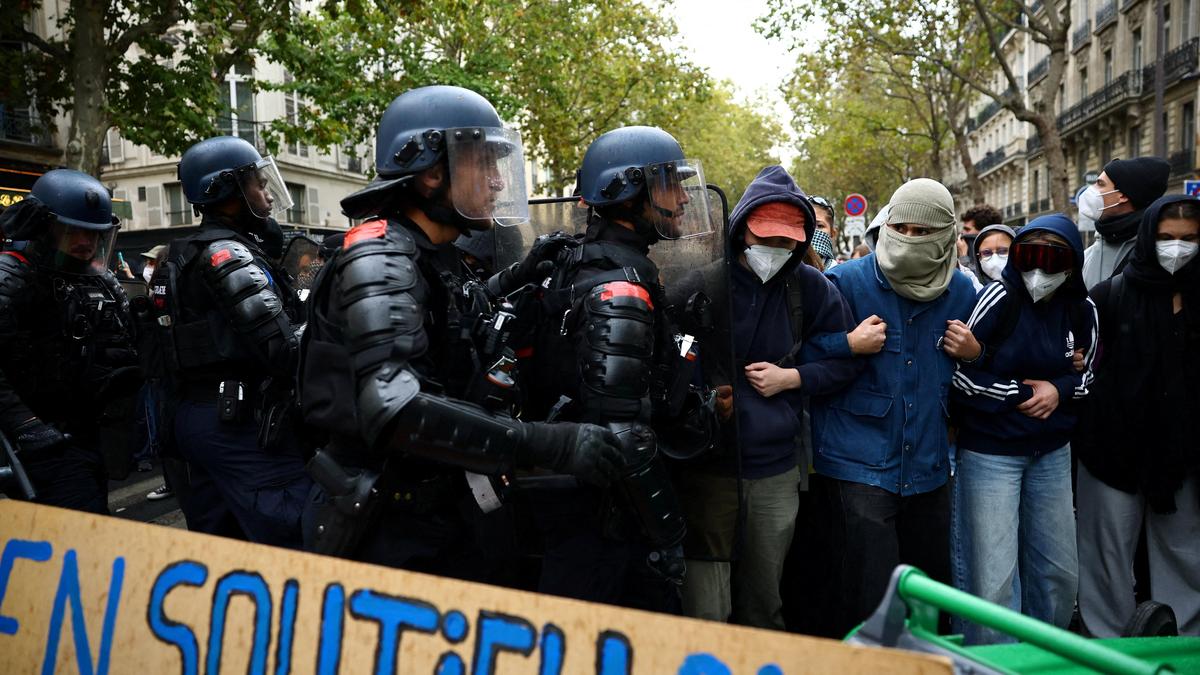
France suspends stun grenades following an incident where a student lost his hand during a protest in Lens. The policy shift follows mounting pressure on the government over its crowd-control tactics during youth demonstrations, as reports confirm that authorities are facing intense scrutiny.
The Incident in Lens and Why France Suspends Stun Grenades
The ban was announced following a turbulent protest in the northern city of Lens. According to available details, the confrontation involved student protesters and law enforcement officers managing the crowds. During the height of the unrest, a teenager suffered catastrophic injuries when a stun grenade was deployed in close proximity.
Initial medical reports confirmed that the explosive device directly caused the teenager’s severe injury. The severity of the outcome immediately drew intense public scrutiny and raised questions regarding the tactical methods utilized by security forces during civilian demonstrations. Civil liberties groups have long warned about the dangers of these weapons, and this tragic event has brought those concerns to the forefront of national discourse.
Furthermore, local witnesses reported widespread confusion as the chaotic scene unfolded near the main square. Emergency responders rushed to the location to provide immediate aid to the wounded student while officers attempted to secure the perimeter against a growing crowd of concerned onlookers. The immediate aftermath captured national attention, highlighting the volatile nature of urban demonstrations and the urgent need for a reassessment of everyday police operations.
Immediate Governmental Action
In response to the growing public outcry and the gravity of the mishap, Interior Minister Laurent Nunez stepped in directly. He announced an immediate halt to the use of stun grenades by police officers deployed to monitor student protests.
The move marks a significant acknowledgement by top government officials regarding the inherent dangers associated with certain types of non-lethal munitions. By temporarily pulling these devices from the field, the ministry aims to ease tensions and allow for a thorough review of standard operating procedures during public demonstrations. Law enforcement agencies are now tasked with reassessing how they handle volatile crowds without resorting to heavy-duty explosives that can cause permanent, life-altering trauma to young citizens.
Additionally, internal reviews have been initiated to determine whether proper protocol was followed prior to the deployment of the munitions. Officials stressed that accountability remains a top priority as the ministry evaluates the broader implications of these tactical methods on public safety and community relations.
Broader Questions on Crowd Control
The incident in Lens has reignited a nationwide debate in France concerning how law enforcement handles large gatherings, particularly those involving students and young people. Critics and civil rights advocates have long argued that heavy-handed tactics and explosive crowd-control tools pose an unacceptable risk of severe injury to participants.
As authorities investigate the precise chain of events that led to the teenager’s trauma, pressure is mounting on officials to reevaluate the entire arsenal available to police forces. The temporary ban highlights a delicate balancing act for the government as it attempts to maintain public order while safeguarding the safety and well-being of citizens exercising their right to protest.
Furthermore, policymakers are being forced to look at international best practices in crowd management. Many neighboring European nations have long since abandoned similar explosive munitions in favor of dialogue-based policing and less destructive intervention methods. The current climate in France suggests that public tolerance for military-style gear at peaceful student gatherings has reached a breaking point, demanding systemic changes that go far beyond a temporary suspension.
With the investigation still underway, the decision to ground stun grenades sets a cautious precedent for how future student demonstrations will be managed across the country. Observers will be watching closely to see if this temporary halt eventually transforms into a permanent legislative ban on these controversial devices.
Related reading:
- French Student Protests Paris: Students Flood Streets to Demand Better Education Conditions
- Brave Ethiopian Nanny Fujairah Well Rescue Leaves Heroic Legacy After Suffering Broken Leg
- Traveler Intercepted After Discovery of abu dhabi passenger live ammunition
