

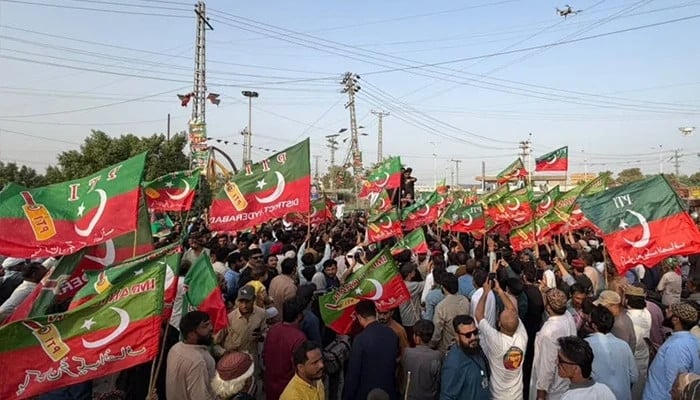
Legal representatives for the Khyber Pakhtunkhwa province have formally challenged the legal authority of the Islamabad High Court to entertain a petition filed against the Pakistan Tehreek-e-Insaf’s planned nationwide demonstrations. The ongoing political friction stems from preparations surrounding a large-scale political march scheduled for later in the month, prompting swift legal and administrative responses.
Challenging Court Authority and PTI September 27 march IHC jurisdiction
During the recent court proceedings, the Advocate General representing Khyber Pakhtunkhwa raised direct questions regarding whether the Islamabad High Court holds the proper territorial jurisdiction to hear the legal challenge targeting the upcoming political mobilization. According to the original report, the initial legal petition seeks to block the party’s planned demonstrations and restrict the political leadership’s movement ahead of the late-September deadline.
Furthermore, legal experts have pointed out that questions surrounding the PTI September 27 march IHC jurisdiction bring constitutional federalism into sharp focus. In many similar historical cases across Pakistan, disputes over where a petition can legally be filed often stall the core judicial review. Courts in Islamabad frequently face friction when dealing with provincial officials who travel to the capital or when provincial assemblies pass resolutions that challenge federal administrative measures.
High-Stakes Political Mobilization and Background Context
The controversy surrounds aggressive mobilization efforts led by provincial figures, including Khyber Pakhtunkhwa Chief Minister Sohail Afridi. As part of a broader campaign to build momentum for upcoming protests, leadership delegations have traveled beyond provincial boundaries, hosting gatherings and rally events in regions such as Sindh to galvanize party loyalists and coordinate logistics for the fast-approaching demonstrations.
To fully understand this showdown, one must look at the broader political landscape in Pakistan over the last year. Following controversial general elections and ongoing legal battles involving incarcerated former Prime Minister Imran Khan, the Pakistan Tehreek-e-Insaf (PTI) has repeatedly turned to street protests to pressure the federal government. These demonstrations have frequently resulted in road closures, heavy policing, and preemptive arrests, turning ordinary weekends in Islamabad and major transit corridors into flashpoints for civil unrest. Analysts note that these tactics are designed to keep the administration on edge while maintaining constant pressure on the judiciary to grant relief or clarify constitutional freedoms of assembly and movement.
Judicial Pause and Next Steps
In response to the preliminary arguments presented by the provincial legal team, the presiding judge opted to extend the timeline for review. The court officially adjourned the hearing, pushing further arguments and the formal decision on the jurisdictional objection to September 14, giving both sides additional time to submit comprehensive legal briefs. For more background on how these court benches are formed, readers can check out reports on the extended judicial benches.
As the legal battle unfolds in the capital, the political atmosphere across the country remains tense. With major opposition figures rallying support nationwide and provincial authorities pushing back against legal restrictions, all eyes now turn to the mid-September court date to determine how the high-profile demonstrations will proceed. Additional administrative updates can be tracked via broader national news coverage detailing the evolving security landscape.
Related reading:
- PTI September 27 protest IHC petition: Islamabad High Court Sets Up Larger Bench
- Islamabad High Court Forms Extended Bench to Review IHC petition challenging PTI protest
- Islamabad Ban Shisha Cafes After High Court Directive
