

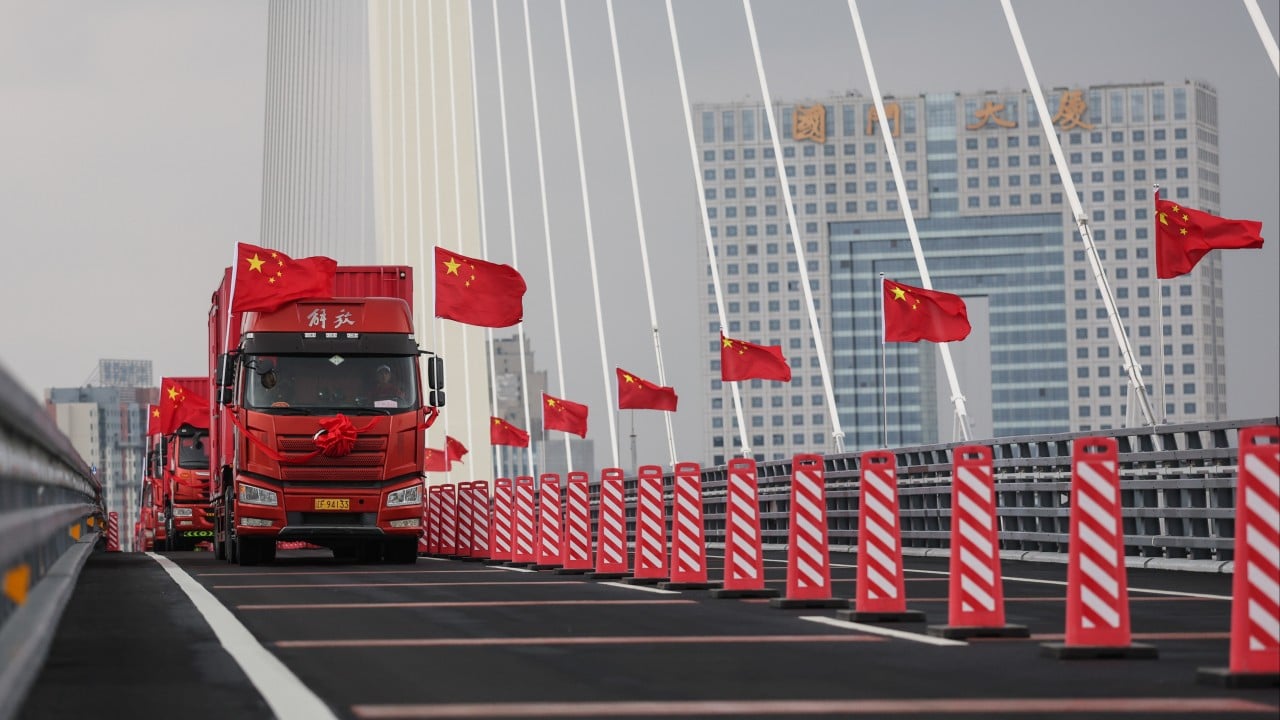
China has formally signaled its continued commitment to deepening economic and diplomatic ties with North Korea, highlighted by the long-awaited launch of a major cross-border infrastructure project. The New Yalu River Bridge opening marks a significant milestone in relations between the two neighboring nations, designed to boost cross-border commerce and travel.
A New Chapter in Bilateral Relations Following the New Yalu River Bridge Opening
During a recorded address broadcast for the ribbon-cutting ceremony on Thursday, Chinese Premier Li Qiang voiced strong official backing for North Korea and its leadership. According to the original report from state media, Li described the newly opened transit link as a powerful symbol of the enduring friendship shared by Beijing and Pyongyang. Diplomats and regional analysts have closely followed the multi-year progression of this massive engineering endeavor, viewing it as a clear sign that both governments are eager to revitalize mutual economic exchanges despite fluctuating international sanctions and broader geopolitical tensions across Northeast Asia.
The diplomatic significance of the ceremony extended far beyond a simple ribbon-cutting event. State-run television networks heavily broadcasted the proceedings, emphasizing unity, shared historical ties, and mutual cooperation in overcoming economic hurdles. By elevating the profile of the inauguration, Beijing made it abundantly clear that its strategic partnership with Pyongyang remains firmly intact and active at the highest levels of government.
Boosting Trade and Economic Ties
The completion of the project has been notably delayed over the years, making its actual opening a welcome development for advocates of closer regional integration. Analysts expect the new crossing to ease logistical bottlenecks that have historically hindered commercial traffic across the frontier, allowing for a much steadier stream of freight vehicles, industrial supplies, and consumer goods.
By upgrading the physical infrastructure connecting the two countries, leaders hope to foster a more predictable environment for cross-border business. The bridge is projected to facilitate a smoother flow of goods and raw materials, addressing longstanding trade limitations that have hampered local economies on both sides of the border. Local merchants and trade operators in border towns are already anticipating higher volumes of commercial activity as customs facilities streamline operations to accommodate the newly unlocked capacity.
Furthermore, economic strategists suggest that enhanced logistical connectivity could encourage broader investments in manufacturing and processing zones near the frontier. With transport times expected to drop dramatically compared to older, congested routes, businesses will likely find it more commercially viable to move heavier freight quantities on a regular schedule.
Expanding Personnel Exchanges
Beyond commercial cargo, it is also designed to encourage greater movement of people between the two countries. Officials anticipate that the updated transit route will support increased travel for business, official delegations, and cultural exchanges, tightening the interpersonal bonds between the two neighboring populations.
As regional dynamics continue to evolve, the inauguration of this strategic passage demonstrates Beijing’s ongoing prioritization of its alliance with Pyongyang, ensuring that economic channels remain open and active for the foreseeable future. Regular human-to-human interactions have historically been tightly regulated, but this updated crossing provides a tangible framework for gradually expanding authorized travel categories, including tourism ventures and educational delegations once final administrative protocols are fully ironed out by immigration authorities.
With the bridge finally operational, attention now turns to how quickly commercial traffic will ramp up and whether this physical link will successfully catalyze the broader economic cooperation both governments have publicly championed. Observers around the world will be watching closely to see if this milestone truly translates into sustained, long-term economic growth for the border region.
Related reading:
- Vietnam and China Border Economies Boom Through China Vietnam Trade Border Durian Tourism
- Trump Bombardier US sales Warning Sparks Cross-Border Trade Fears
- EU China trade talks Beijing: Officials Head for High-Stakes Negotiations
