

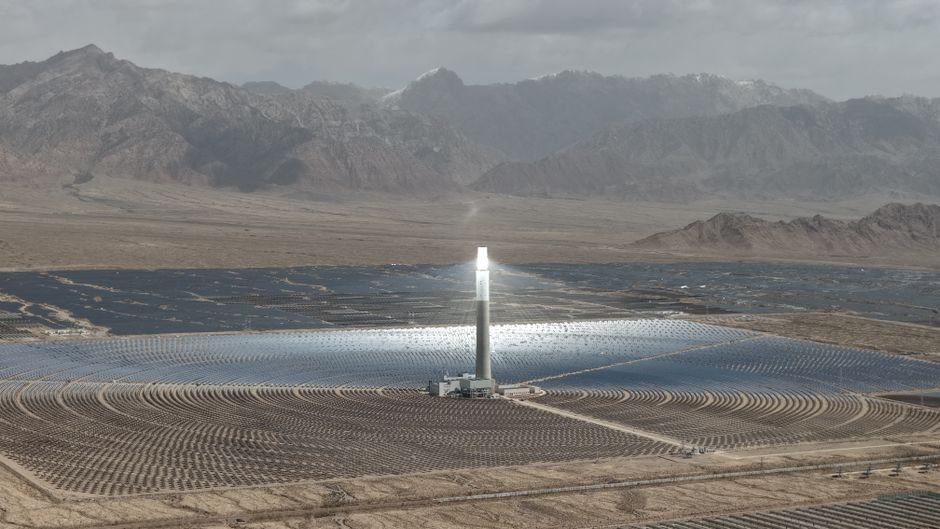
Researchers have taken a major step forward in marine renewable energy by testing a new underwater power system. Operating at a depth of 10 metres, scientists have successfully deployed and operated the world’s first practical submarine solar power plant initiative in China in the open sea, marking a massive leap forward for underwater technology and ocean energy harvesting.
Harvesting Sunlight in the Ocean Depths
For decades, solar panels have been strictly confined to dry land and surface-level floating platforms. However, a dedicated team of scientists from Yunnan University has shattered traditional boundaries by taking photovoltaic technology underwater. Operating at a depth of 10 metres—roughly 33 feet—beneath the surface, the experimental rig successfully demonstrated that capturing solar energy is entirely viable even in the murky, blue-green twilight of the ocean.
During open-water testing, the submerged setup proved its functional capability by consistently charging onboard batteries and running an LED panel. This practical demonstration moves marine solar power out of theoretical physics and into tangible engineering reality, pointing to how future underwater stations and submersibles could power themselves.
As ocean engineers look toward the future, this technological milestone represents a profound shift in how marine infrastructure might harvest energy without relying entirely on mainland power grids. The ability to anchor photovoltaic systems beneath the waves opens up unprecedented opportunities for decentralized ocean energy generation, particularly in remote maritime zones where traditional power transmission is economically unfeasible or structurally impossible.
The Secret Behind the Submersible Panel: Perovskite
The core of this engineering milestone relies on advanced materials science. The research team utilized perovskite-based photovoltaic cells for the underwater array. Unlike traditional silicon panels, perovskite materials offer unique optical and chemical properties that make them exceptionally adaptable to various light conditions, including the filtered, low-intensity light found beneath the ocean waves.
As detailed in the original report, this breakthrough opens up exciting new pathways for powering long-term aquatic operations without relying entirely on cumbersome surface cables or limited battery lifespans.
Furthermore, laboratory analyses of these specialized perovskite cells indicate that they maintain a remarkably stable photoelectric conversion rate despite the spectral filtering that occurs as sunlight penetrates seawater. While red and infrared wavelengths are rapidly absorbed near the surface, blue and green light travels deeper, and perovskite formulations can be precisely tuned to capture these specific ambient light frequencies with remarkable efficiency.
Global Implications for Ocean Energy and the Submarine Solar Power Plant China Project
The successful open-sea trial holds immense potential for a variety of maritime applications. From scientific research outposts and environmental monitoring stations to deep-sea robotic hubs, the ability to generate clean energy directly on-site could revolutionize how humanity interacts with and studies the world’s oceans.
On a broader geopolitical and industrial scale, the development of a functioning submarine solar power plant china initiative signals a new era in renewable resource acquisition. As nations race to secure sustainable energy sources beyond terrestrial boundaries, underwater solar infrastructure could redefine maritime territorial strategies, deep-sea research funding, and international cooperation in ocean technology. By establishing that photovoltaic systems can endure and generate power in high-pressure aquatic environments, researchers have unlocked a vast, underutilized realm for clean energy exploration.
While challenges remain in scaling the technology for long-term deployment against corrosion, marine growth, and pressure, this initial milestone proves that the ocean floor may eventually become a vibrant frontier for solar innovation.
As researchers continue to refine and test these submerged photovoltaic systems, we are one step closer to a future where renewable energy truly knows no bounds—not even the ocean surface.
Looking ahead, marine scientists and energy sector analysts anticipate that subsequent testing phases will involve deeper deployments and more robust structural housing designed to withstand extreme hydrostatic pressure and corrosive marine environments over multi-year operational lifespans.
Related reading:
- China AI Security Risks: Beijing Warns of Severe National Security Threats
- Abu Dhabi AI Executive Council Integrates Artificial Intelligence for the First Time
- U.S. and China Experts Pitch us china ai safeguards to Mitigate Dangers
