

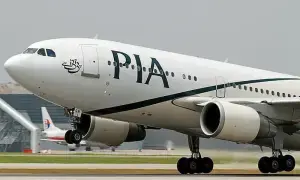
The government of Pakistan has pushed back firmly against circulating online rumors, clarifying that public funds and sovereign-backed loans will not be used to secure new commercial jets for Pakistan International Airlines (PIA). Ensuring clarity on PIA aircraft financing sovereign guarantee policies has become a top priority for officials. Following a high-profile auction last December that successfully transitioned the national carrier into private hands, questions have lingered regarding how the airline plans to modernize its fleet. Recent online speculation suggested that high-ranking officials were actively negotiating state-backed financing packages for upcoming aircraft acquisitions.
Clearing the Air on Social Media Speculation
The debate erupted online after rumors spread that a government minister was arranging state-backed loans to buy modern airliners. In response to these claims, Khurram Schehzad, an adviser to the finance ministry, took to social media to set the record straight. He explicitly stated that the administration is neither purchasing planes for the newly privatized carrier nor providing taxpayer-backed sovereign guarantees for related loans, according to the original report.
This swift clarification comes at a critical juncture for Pakistan’s ongoing economic reforms. As the country moves away from state-managed enterprises and embraces structural privatization under international lender agreements, avoiding contingent liabilities is paramount. The national airline had previously accumulated staggering operational deficits over decades, relying heavily on federal bailouts to stay afloat. Allowing the newly privatized entity to return to relying on public balance sheets would undermine the entire reform agenda.
High-Level Meetings Spark Fleet Discussions
The online debate was fueled by recent diplomatic engagements on the international stage. During the 81st session of the United Nations General Assembly held in New York, Finance Minister Muhammad Aurangzeb engaged in discussions with John Jovanovich, the chair of the US Export-Import (Exim) Bank. While the dialogue primarily centered on major regional undertakings like the Reko Diq mining initiative, officials also explored prospective funding structures for aviation equipment.
The discussions with the US EXIM Bank represent a broader effort to re-engage Western financial institutions for capital-intensive projects. However, American export credit agencies operate under strict regulatory frameworks that differentiate sharply between sovereign-backed credits and commercial corporate debt. Because PIA is now privately owned, any future credit facility must rely entirely on the company’s corporate creditworthiness rather than federal underwriting.
Exploring Boeing 787 Dreamliners and Commercial Realities
During their discussions in New York, the finance ministry confirmed that the Pakistani delegation expressed official interest in acquiring Boeing’s advanced 787 Dreamliners. The minister sought potential support avenues for a comprehensive financing package that would encompass both the aircraft themselves and their respective engines. However, officials emphasize that any such commercial fleet expansion must proceed strictly through private channels without relying on the public treasury or government-backed loan assurances.
Understanding PIA Aircraft Financing Sovereign Guarantee Policies
The broader debate surrounding PIA aircraft financing sovereign guarantee frameworks highlights the delicate balance the current administration must maintain. On one hand, the airline desperately requires widebody aircraft upgrades to compete effectively on lucrative international routes to Europe and the Middle East. On the other hand, fiscal discipline remains the cornerstone of Pakistan’s stabilization program.
Industry analysts point out that private aviation leasing markets are entirely accustomed to dealing with standalone corporate entities. Successful airlines routinely secure multi-million-dollar fleet renewals through asset-backed equipment trust certificates and private commercial leasing syndicates. By forcing the national carrier to enter these commercial negotiations on its own merits, the administration is effectively pushing the airline toward genuine operational independence.
As Pakistan International Airlines continues its journey under private ownership, the administration’s recent clarification draws a firm boundary between state duties and private commercial operations. By ruling out taxpayer exposure, the government aims to assure the public that private business ventures will handle their own financial obligations moving forward.
Related reading:
- Petrol Price Reduced Pakistan: Fuel Rates Drop Slightly as Government Adjusts Rates Ahead of Weekend
- Pakistan Petrol Price Increase Today: Fuel Prices Rise Across the Board as Government Adjusts Rates
- Pakistan Petrol Price Increase Today: Fuel Prices Rise Again as Government Adjusts Rates
