

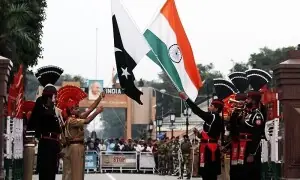
Regional experts and international observers are increasingly calling for rational statecraft to preserve South Asia strategic stability. Nowhere is this maturity more vital than in South Asia, a region historically burdened by decades of friction where nuclear capabilities remain part of the geopolitical equation. The presence of overlapping territorial disputes, historical grievances, and deeply entrenched political rivalries means that any breakdown in communication can rapidly cascade into a major international crisis. For decades, military planners and diplomats have attempted to establish robust guardrails, yet the current political climate threatens to dismantle these hard-won mechanisms.
The Erosion of Arms Control and Diplomacy in South Asia Strategic Stability
During a recent Islamabad workshop addressing these growing concerns, retired Lt-Gen Mazhar Jamil pointed out that diplomatic avenues in South Asia are rapidly narrowing. As a former head of the Strategic Plans Division and an adviser to the National Command Authority, Jamil noted that weakening arms control structures combined with a heavy reliance on hard power are generating serious complications for regional peace, according to the original report. Analysts at the workshop emphasized that without formal channels for communication, military miscalculations are much more likely to occur during periods of heightened border friction.
Furthermore, the systematic dismantling of bilateral agreements that were originally designed to prevent accidental escalations has left both civilian governments and military commands with fewer options for de-escalation. When crisis communications break down, even minor tactical misunderstandings can be catastrophically misinterpreted as preparations for a larger offensive. This dangerous vacuum underscores why international security organizations continually advocate for renewed bilateral dialogues and the restoration of suspended military-to-military hotlines.
Jingoistic Rhetoric Raises Stakes
Despite clear warnings that all-out conflict between nuclear-armed nations is fundamentally unviable, high-ranking military figures and political leaders have continued to escalate tensions. Following last year’s hostilities, inflammatory remarks from various political and defense figures have drawn sharp rebukes. Critics emphasize that while aggressive rhetoric might appeal to hardline domestic factions, it severely jeopardizes fragile stability.
In modern political landscapes, domestic electoral cycles often encourage nationalist posturing, where candidates attempt to project strength by adopting uncompromising stances toward neighboring countries. Unfortunately, this performative aggression frequently boxes leaders into tight corners, making diplomatic compromise politically toxic. As inflammatory media broadcasts amplify these nationalist narratives, the general public becomes increasingly polarized, leaving little room for moderate voices to advocate for peaceful coexistence and cooperative regional development.
Navigating the Path Forward
The recent history of near-escalation highlights the narrow margin for error between neighboring nuclear states. As experts continue to urge a return to diplomatic norms, the international community watches closely to see whether leaders in the region will choose restraint over posturing.
Ultimately, maintaining stability in South Asia requires abandoning aggressive posturing in favor of mature dialogue. With nuclear arsenals involved, regional leaders face a profound responsibility to prioritize peace over short-term political gains. Long-term prosperity across the subcontinent ultimately depends on economic integration, cultural exchange, and mutual respect for national sovereignty. Until policymakers recognize that security is achieved through cooperation rather than intimidation, the region will remain vulnerable to the perpetual cycle of tension and crisis.
Related reading:
- South Africa Condemns New US Visa Restrictions Amid Deepening Diplomatic Tensions
- Iranian FM Araghchi Beijing visit: High-Stakes Diplomacy with Wang Yi Amid West Asian Tensions
- Shanghai Cooperation Organisation Adopts Historic SCO nuclear security declaration Amid Rising Regional Tensions
